


 English
 Português
 Indonesia
Submit feedback
Category
Timing Pulley & Belt Pulley Manufacturer
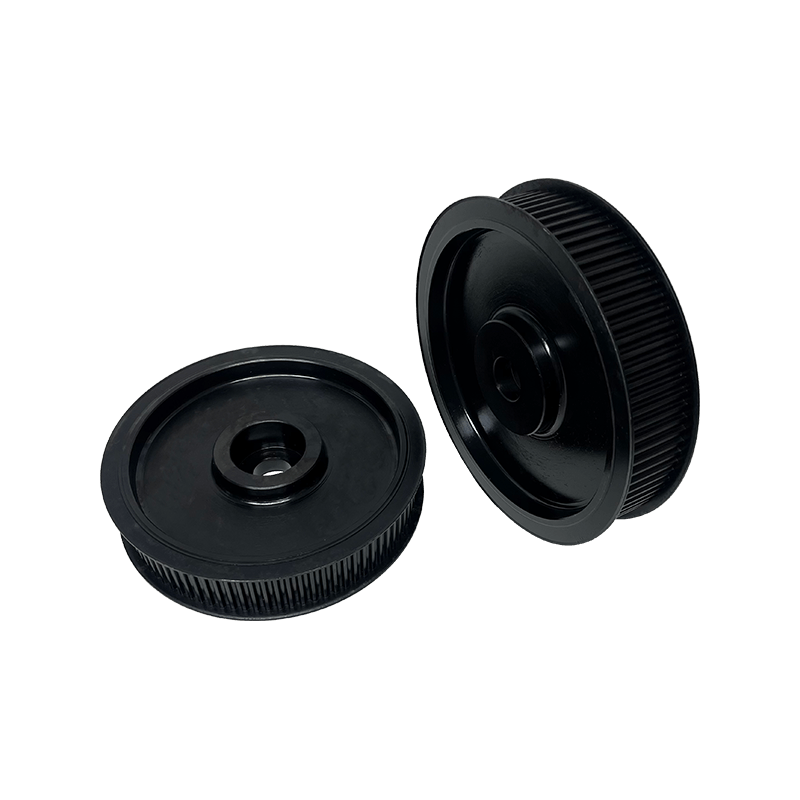
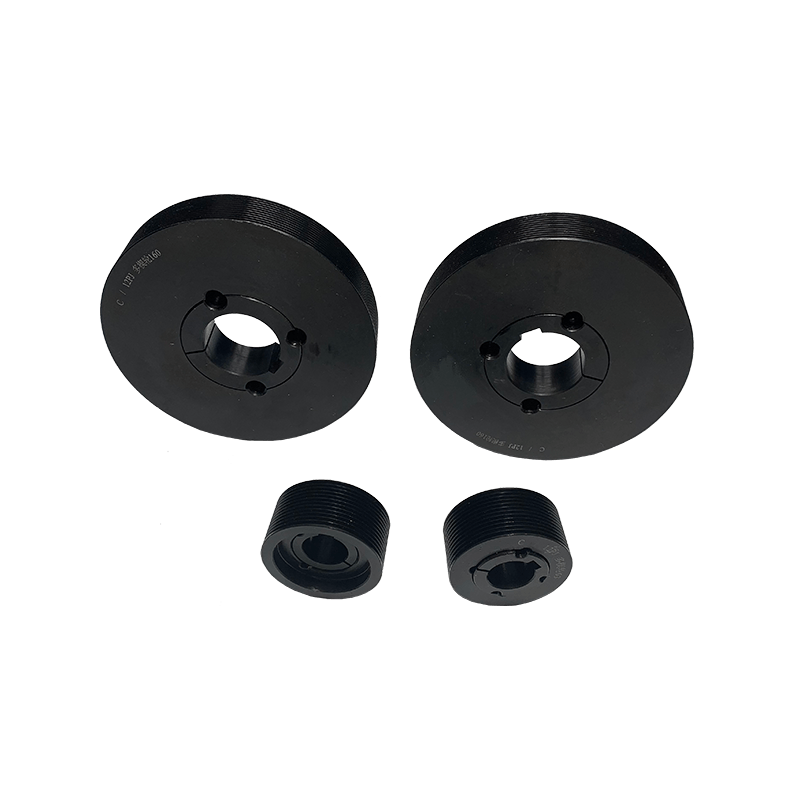
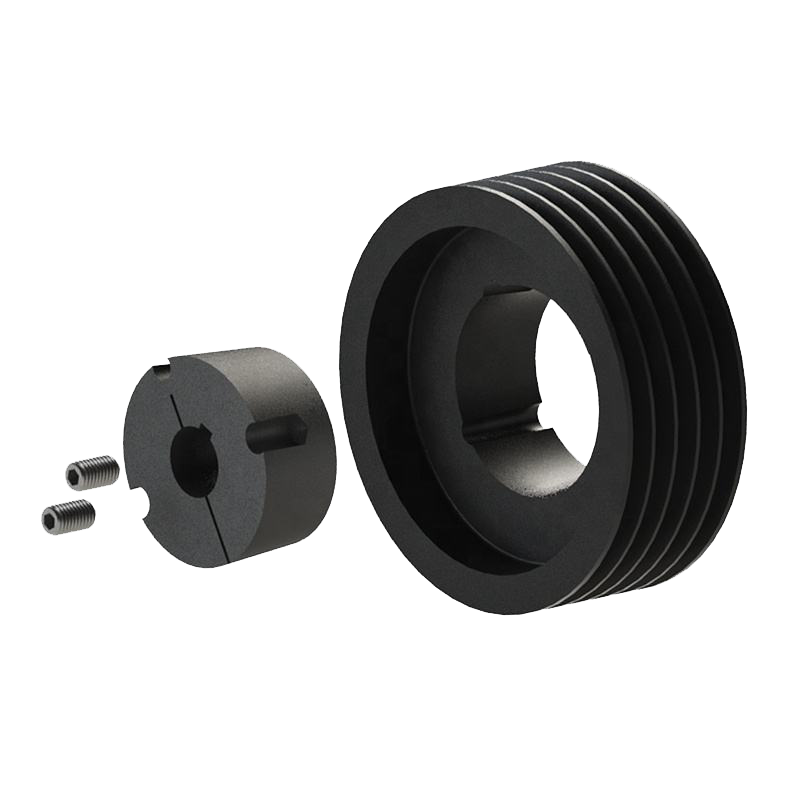
Timing pulleys are transmission components used with synchronous belts. Their core function is to transmit power from the driving shaft to the driven shaft through the precise meshing of their teeth with the belt's grooves, achieving zero slip and a constant transmission ratio. They are a key component of the synchronous belt drive system (consisting of the synchronous belt, pulleys, and tensioning device).
I. Core Advantages of Timing pulleys
Compared to traditional transmission methods such as gears, chains, and conventional belts, synchronous pulleys (used with synchronous belts) offer the following significant advantages:
High transmission accuracy and zero slip
The teeth of the synchronous pulleys are forced to mesh with the belt's grooves, eliminating the "slip" associated with conventional V-belts and flat belts. The transmission ratio (the speed ratio between the driving and driven pulleys) remains constant, with extremely low error (typically less than 0.5%). They are suitable for applications requiring precise speed synchronization and positional accuracy, such as printers, CNC machine tools, and automated production lines. High transmission efficiency and low energy consumption.
Meshing transmission eliminates the energy loss of friction transmission. The efficiency of synchronous pulley drive systems typically reaches 98%-99.5%, significantly higher than conventional V-belt transmissions (approximately 85%-92%). Long-term use effectively reduces equipment energy consumption and is particularly suitable for high-power, long-duration machinery (such as textile machinery and conveying equipment).
Smooth operation and low noise.
Timing belts are typically made of rubber or polyurethane, which offers a certain degree of elasticity and can cushion shock and vibration during transmission. Furthermore, the meshing of teeth and grooves eliminates the "polygon effect" of chain transmission (vibration caused by the chain's loosening and tightening). Operating noise is significantly lower than that of gear transmissions (metal meshing) and chain transmissions, making them suitable for noise-sensitive applications such as office equipment and medical devices. Low maintenance costs and long life. Synchronous pulleys (especially those made of metal) have a simple structure and low wear. Unlike gear drives, synchronous belt drives do not require frequent lubrication or regular chain tension adjustment, as is required with chain drives. Routine maintenance only requires regular inspection of the belt for signs of wear. This results in low overall maintenance costs and a service life of up to 3-5 years (depending on the operating environment and load).
Adaptable to multi-axis transmissions and flexible layouts. The combination of synchronous pulleys and synchronous belts makes it easy to synchronize multiple drive shafts (e.g., a single motor drives multiple rollers). The installation position of the synchronous pulleys is not strictly restricted (horizontal, vertical, or inclined), allowing for flexible adaptation to complex equipment layouts and reducing equipment design complexity.
II. Timing pulleys Processing
The processing flow for timing pulleys varies depending on the material (commonly steel, aluminum alloy, cast iron, and plastic) and the required precision (standard vs. precision). The core process is as follows, using the most widely used metal Timing pulleys (steel/aluminum alloy) as an example:
1. Raw Material Preparation and Pretreatment
2. Rough Machining: Initially shaping the pulley body
3. Finishing: Ensuring critical dimensional accuracy
4. Tooth Profile Machining: The core process (determining meshing accuracy)
5. Surface Treatment: Improving performance and lifespan
6. Inspection and Acceptance

Contact
-

+86-510-82113539
Shirley: +86-18906170683
Got questions? Call us 24/7 -

[email protected]
Contact us now for a quote -

No.99 Fu Rong Zhong San Rd, Xishan District Economic and Technological Development Zones Wuxi City, Jiangsu, China
Copyright © Wuxi KUEISN Transmission Equipment Co.,Ltd.All Rights Reserved. Custom Aluminum pulley & Timing Pulley Manufacturer
