


 English
 Português
 Indonesia
Submit feedback
Category
Polyurethane (PU) Timing Belt Manufacturer
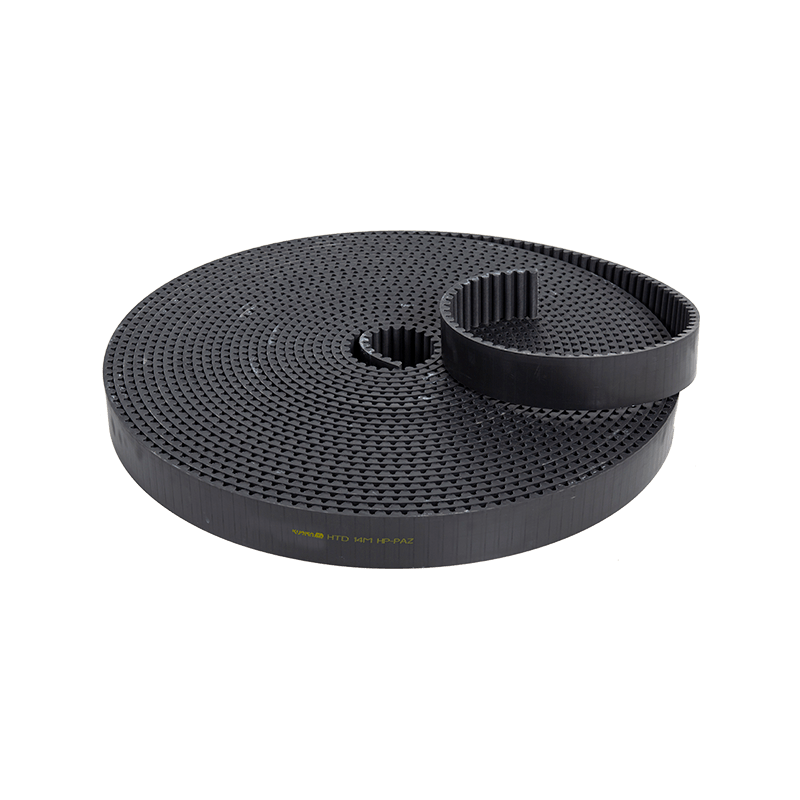
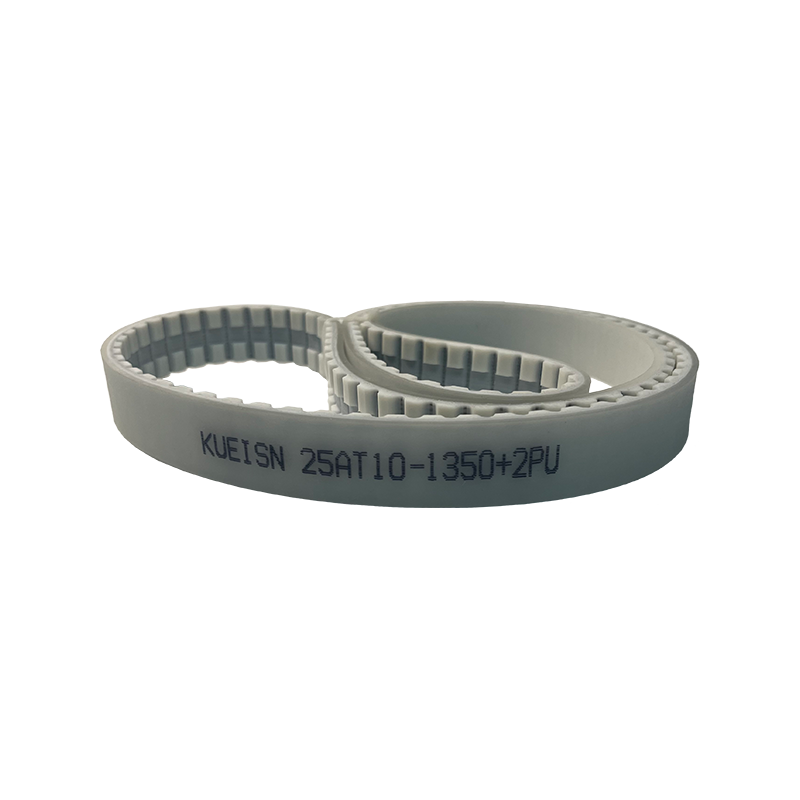
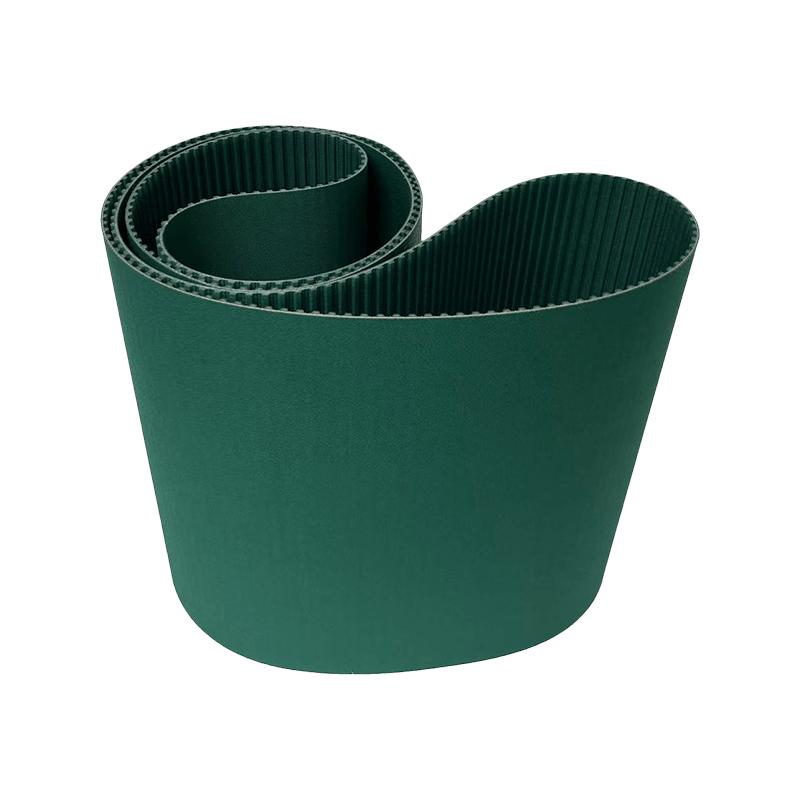

Polyurethane timing belts are made of a polyurethane (PU) base material, embedded with a high-strength tension layer (such as steel wire or fiberglass rope), and feature a precisely machined surface tooth profile. They combine the wear, oil, and aging resistance of polyurethane with the high strength and low elongation of the tension layer, making them a core component in high-precision transmission applications.
1. Classification by Tooth Profile Specification (Core Classification Method)
The tooth profile is crucial to determining the transmission accuracy, speed, and load capacity of a synchronous belt. Commonly used international tooth profile standards and corresponding types are as follows:
Trapezoidal Tooth Synchronous Belts (T-Type, AT-Type):
These trapezoidal teeth are the first type of PU synchronous belt to become popular. They come in a variety of pitch specifications (such as T5, T10, AT5, and AT10, with "T" representing standard trapezoidal teeth and "AT" representing narrow trapezoidal teeth. The pitch represents the center-to-center distance between adjacent teeth, measured in mm). This type of synchronous belt offers a simple structure and low cost, making it suitable for medium-to-low speed, medium-load transmission applications, such as small conveyors and the drive systems of household appliances (washing machines and printers). Arc Tooth Synchronous Belts (HTD, STD, RPP):
Compared to trapezoidal teeth, arc teeth provide a larger meshing area with the pulley and more evenly distribute force, effectively reducing tooth wear and transmission noise. They also allow for higher linear speeds (up to 80 m/s) and greater loads. These include:
HTD (High Torque Transmission) : Common tooth pitches include 3mm, 5mm, and 8mm, making them suitable for high-torque, medium- and high-speed transmissions, such as CNC machine tool feed systems and automotive auxiliary equipment (vacuum pumps);
STD (Super Torque Transmission) : Featuring a larger tooth pitch (e.g., 20mm, 25mm) and a higher load capacity, they are used in heavy machinery (e.g., large printing presses and packaging machines);
RPP (Precision Arc Tooth) : Featuring higher tooth profile accuracy and minimal transmission error, they are designed for high-precision transmissions, such as in electronic equipment (semiconductor wafer handling mechanisms) and medical devices (blood analyzers). Double-Sided Toothed Timing Belts (DA and DB):
Both sides of the base belt are machined with teeth, allowing them to drive pulleys in both directions simultaneously, achieving "one-drive-multiple" transmission requirements and saving installation space. Depending on the tooth profile, they are categorized as double-sided trapezoidal teeth (DA) and double-sided arc teeth (DB). They are suitable for compact transmission systems, such as multi-station synchronous drives in automated production lines and robotic joint drives.
Classification by Special Function
PU timing belts with specialized properties are developed to meet the environmental requirements of specific industries:
Food-Grade PU Timing Belts:
Made from polyurethane materials that meet food contact safety standards (such as FDA-certified materials), they offer a smooth, odorless surface suitable for direct food contact, are easy to clean, and are sterilizable (withstand high temperatures of 80-120°C). They are suitable for material conveying in the food processing industry, such as bread production lines and beverage filling equipment. Anti-static PU Timing Belts:
By adding conductive materials (such as carbon fibers and conductive particles) to the polyurethane matrix, the belt achieves a surface resistance of ≤10^8Ω. This effectively dissipates static electricity generated during transmission, preventing damage to electronic components. It is suitable for applications in the electronics industry, such as semiconductor chip transport and circuit board assembly lines.
Wear-Resistant/Oil-Resistant PU Timing Belts:
By adding a wear-resistant coating (such as a polytetrafluoroethylene coating) to the base belt surface or optimizing the polyurethane formula, oil and wear resistance are enhanced. These belts are suitable for applications exposed to oil and high wear, such as automotive engine auxiliary transmissions and industrial gearbox linkages.
The production process for polyurethane timing belts requires strict precision control (especially regarding tooth shape and tension layer positioning). Key steps include raw material preparation, molding, curing, and post-processing.
Key Advantages of Polyurethane Timing Belts:
Compared to traditional rubber timing belts, chain drives, and gear drives, polyurethane timing belts offer significant advantages in precision, lifespan, and environmental adaptability, including the following:
Extremely high transmission accuracy and zero slip
Minimal operating wear
Stretch-resistant and low elongation for a long life
Low maintenance costs and easy installation
Strong environmental adaptability and flexible application

Contact
-

+86-510-82113539
Candy:+86-13357926453
Got questions? Call us 24/7 -

[email protected]
Contact us now for a quote -

No.99 Fu Rong Zhong San Rd, Xishan District Economic and Technological Development Zones Wuxi City, Jiangsu, China
Copyright © Wuxi KUEISN Transmission Equipment Co.,Ltd.All Rights Reserved. Custom PU Timing Belt Manufacturer
