


 English
 Português
 Indonesia
Submit feedback
PU Characteristics and Precautions of Synchronous Belts
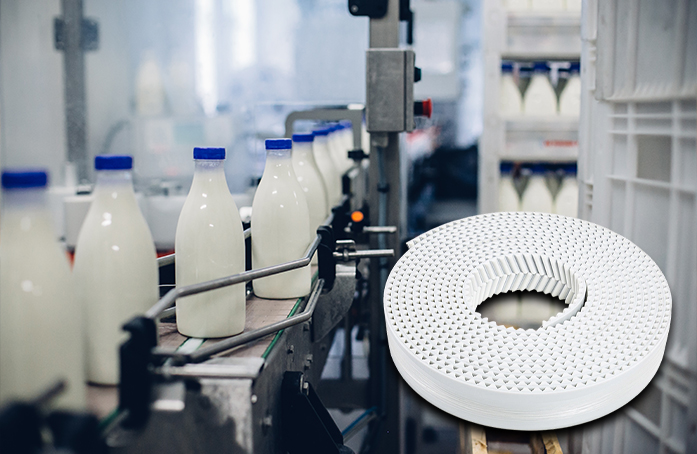
With the rapid mechanization of industrial production, PU synchronous belts have gained widespread application. They serve mechanical transmission needs across textiles, communication cables, chemicals, metallurgy, instrumentation, food processing and automotive sectors.
The transmission system of a PU synchronous belt features an endless belt with evenly spaced teeth along its inner surface together with matching pulleys. This design merges the strengths of traditional belt, chain, and gear mechanisms. Power transfers through the direct meshing of belt teeth into pulley grooves. Such belts normally function between -20°C and 80°C.
PU synchronous belts offer the following key characteristics:
- Accurate Transmission: They maintain a fixed transmission ratio with no slippage, ensuring precise power transfer.
- Smooth & Quiet Operation: They provide cushioning and damping capabilities, resulting in low noise and stable transmission.
- High Efficiency: Transmission efficiency can generally reach up to 98%, offering significant energy-saving benefits.
- Broad Performance Range: They support a wide range of transmission ratios (typically up to 10), linear speeds up to 50 m/s, and power transmission from a few watts to over a hundred kilowatts.
Installation Precautions for PU Synchronous Belts:
- Adjustable Centers: If the pulley centers are adjustable, first shorten the center distance, install the belt, and then reset the distance to the specified tension.
- Use of Tensioners: When a tensioner pulley is present, loosen it before installing the belt, and then adjust it afterward.
- Proper Installation: Avoid using excessive force or prying the belt with tools like screwdrivers during installation, as this may damage the tensile cords.
- Shaft Alignment: The axes of the two pulleys must be well-parallel during transmission. Misalignment can cause the belt to track improperly or slip off the pulleys.
Materials of PU Synchronous Belts
Two common material constructions are:
A high-quality synthetic chloroprene body with a tensile layer of imported fiberglass cords and a tooth surface made of wear-resistant nylon fabric, combined with various functional additives.
A polyurethane tooth profile bonded to a tensile layer of high-strength steel wire ropes (or polyester cords).
In summary, PU synchronous belts are typically constructed with steel wire ropes or fiberglass as the strength member, coated externally with polyurethane or chloroprene rubber. The toothed inner circumference engages with the pulley teeth. They provide accurate transmission ratios, low axial force, compact design, and offer good resistance to oil, wear, and aging.
The above covers the main characteristics and precautions for PU synchronous belts. For more information, please feel free to contact us! Our customer service is always ready to assist you.


Contact
-

+86-510-82113539
Shirley: +86-18906170683
Got questions? Call us 24/7 -

[email protected]
Contact us now for a quote -

No.99 Fu Rong Zhong San Rd, Xishan District Economic and Technological Development Zones Wuxi City, Jiangsu, China
Copyright © Wuxi KUEISN Transmission Equipment Co.,Ltd.All Rights Reserved. OEM Industrial Timing Belt and Synchronous Pulley Manufacturer
