


 English
 Português
 Indonesia
Submit feedback
Comparison of Advantages and Disadvantages of Imported Industrial Belts
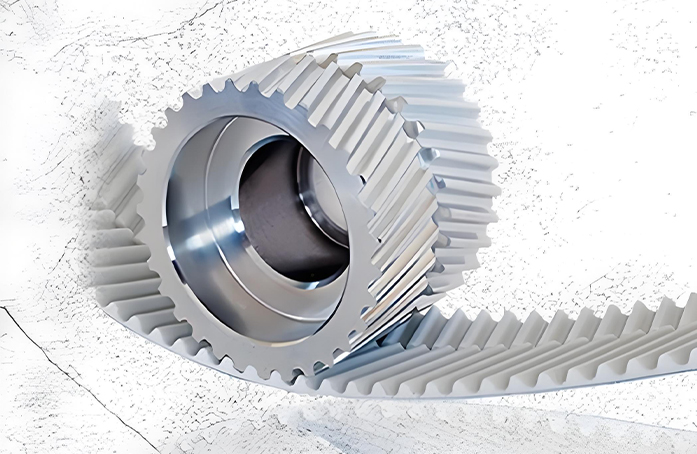
In industrial transmission systems, belt drives are widely utilized across various types of mechanical equipment, distinguished by their significant advantages: structural simplicity, smooth operation, low noise levels, and inherent overload protection. However, within the realm of small-scale consumer electronics—such as toys—the application of imported industrial belts is witnessing a gradual increase. On one hand, belt drives effectively satisfy the fundamental requirements of toy products, enabling long-distance power transmission as well as smooth and quiet operation; on the other hand, their inherent drawbacks—including relatively large spatial footprints, comparatively lower transmission efficiency, and limited belt lifespan—present considerable challenges for toy designers. Consequently, determining how to fully leverage the performance advantages of imported industrial belts within the compact confines of a toy, while simultaneously effectively mitigating their limitations, has emerged as a technical subject within the industry that warrants in-depth exploration.
Comparison of Advantages and Disadvantages of Belt Drives (with a Focus on Imported Industrial Belts in Applications such as Toys)
Advantages of Belt Drives
Overload Protection: Slipping can act as a simple self-protection mechanism against overload.
Simple Structure: The design has relatively low precision requirements and can fulfill the motion needs of many applications, including toys.
Long-Distance Transmission: Capable of transferring motion over relatively long distances.
Smooth and Quiet Operation: Provides stable operation with low noise levels.
Disadvantages of Belt Drives
Space Requirements: The drive size can be large, and many compact products (like toys) may not have sufficient space for installation.
Transmission Efficiency: The efficiency of speed reduction transmission is relatively low. The theoretical speed reduction ratio is determined by the ratio of the large pulley's radius to the small pulley's radius.
Limited Service Life: Belts have a finite lifespan, which may affect the overall product longevity (though for toys, extremely long life is not always required).
Transmission Accuracy: Prone to inaccuracies due to belt slippage.
Components of Belt Drives
Belt: In toys, a wide variety of belts with circular or rectangular cross-sections are used, typically made of rubber. Belts are usually injection-molded. For many small toy manufacturers, producing their own rubber belts is not cost-effective; purchasing standard rubber rings (often costing just a few cents each) is more economical than investing tens of thousands in custom molds.
Pulley: Pulleys are generally made of materials like brass or POM plastic. Typically, the smaller drive pulley (mounted directly on the motor shaft) uses a metal brass wheel, while the larger driven pulley uses a POM plastic wheel. Mechanically, the belt should transmit force through friction with the sides of the pulley groove, which is the effective method. Toy pulleys are often designed this way, though sometimes the belt simply presses against the pulley in practice.
Design Consideration
Isolated Space: Pulleys require an isolated space in the toothed section. Since belts are made of rubber and pulleys are mostly POM plastic, other transmission components (such as gears and motors) may generate significant noise due to operational tolerances. Noise-reduction gear oil is often used, but this oil can cause rubber belts to slip on pulleys. Furthermore, the rubber can absorb the oil, reducing the belt's service life. Therefore, when designing geared transmissions, it is advisable to place the entire belt and pulley assembly in a separate, enclosed space to prevent oil from splashing onto the belt.


Contact
-

+86-510-82113539
Shirley: +86-18906170683
Got questions? Call us 24/7 -

[email protected]
Contact us now for a quote -

No.99 Fu Rong Zhong San Rd, Xishan District Economic and Technological Development Zones Wuxi City, Jiangsu, China
Copyright © Wuxi KUEISN Transmission Equipment Co.,Ltd.All Rights Reserved. OEM Industrial Timing Belt and Synchronous Pulley Manufacturer
