


 English
 Português
 Indonesia
Submit feedback
Polyurethane Synchronous Belts: An Introduction to Their Structure
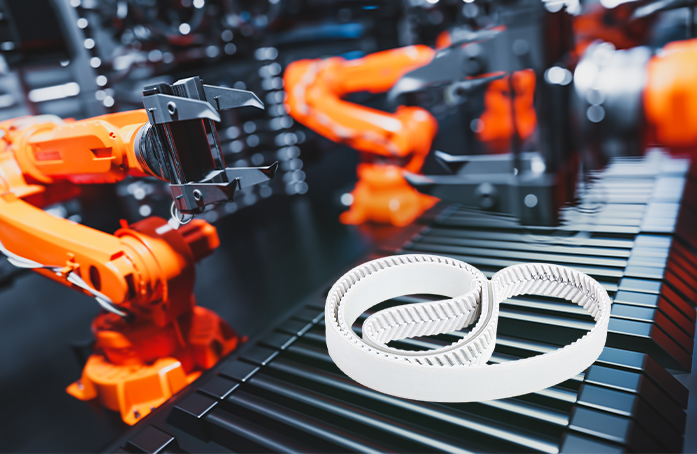
As an industrial product, the polyurethane synchronous belt primarily consists of three key components: the backing, the tensile member (or tensile layer), and the belt teeth.
Backing Layer: Function and Properties
First, let's look at the backing of a polyurethane synchronous belt. This layer holds everything together and fully encases the tensile cords. It provides great flexibility and holds up well against repeated bending without cracking or fatiguing. It also has small channels or gaps that let any trapped air escape as the belt engages with the pulley teeth.
That simple feature helps keep operating noise noticeably lower. The backing material is also known for its resistance to aging, good oil resistance, and notably high wear resistance. On its inner surface, appropriately sized V-shaped grooves are present. Beyond meeting process requirements, these grooves enhance the belt's bending fatigue performance. Thus, the backing is a vital part of the polyurethane synchronous belt.
Tensile Member: Core Load-Bearing Structure
Next is the tensile member, which typically consists of steel cables or polyester cords. This layer is the belt's load-bearing component, made of multiple strands of steel wire (or polyester cord) spirally wound along the belt's width and positioned at its pitch line. Its primary function is to transmit power while ensuring the belt's pitch remains constant during operation. Due to its high elastic modulus, the tensile member experiences minimal elongation under load, which maintains pitch accuracy. For optimal performance, the tensile layer must possess high tensile strength and bending fatigue resistance.
Belt Teeth Design and Performance
Finally, let's take a look at the belt teeth. The tooth profile and pitch have to be really precise so they mesh smoothly with the pulley grooves. That’s why manufacturers keep a tight grip on all the geometric dimensions during production. These teeth offer good shear strength, solid wear resistance, and decent oil resistance. In industrial settings, polyurethane timing belts are well known for their excellent oil and wear performance. They work great for medium-to-low power transmission and high-speed applications, usually in fairly dry environments, with operating temperatures ranging from -20°C to +80°C. High-quality polyurethane gives the belt strong wear and tear resistance, while the manufacturing process holds very tight tolerances on thickness and length for consistent quality from belt to belt.
Through specialized molding techniques, polyurethane synchronous belts achieve high physical and chemical stability. This makes them well-suited for high-strength, high-precision, and even high-speed transmission systems.


Contact
-

+86-510-82113539
Shirley: +86-18906170683
Got questions? Call us 24/7 -

[email protected]
Contact us now for a quote -

No.99 Fu Rong Zhong San Rd, Xishan District Economic and Technological Development Zones Wuxi City, Jiangsu, China
Copyright © Wuxi KUEISN Transmission Equipment Co.,Ltd.All Rights Reserved. OEM Industrial Timing Belt and Synchronous Pulley Manufacturer
