


 English
 Português
 Indonesia
Submit feedback
High Compatibility Fan Belt: Features, Types & Selection Guide
What "High Compatibility" Actually Means in Fan Belt Engineering
A fan belt fails in the field. The machine stops. The nearest supplier carries three different brands, none of which match the OEM part number — yet the equipment is back running within the hour. That scenario is only possible when the belt installed is genuinely high compatibility: a product engineered to dimensional and performance standards that allow it to serve as a direct functional replacement across multiple makes, models, and applications.
High compatibility, in belt engineering terms, means the product conforms to internationally recognized cross-sectional and length standards — primarily ISO 22: Classical V-Belts, ISO 15: Narrow V-Belts, and the RMA IP-20/IP-22 series — so that any pulley groove machined to that standard accepts the belt without modification. It also means the material and construction can handle the operating conditions (temperature range, load, speed) of a broad class of machines, not just a single platform. For a more detailed look at how car V-belts transfer engine power to critical systems, the principles of standardization and cross-compatibility run through every application from passenger cars to industrial compressors.
The practical result for a procurement engineer is straightforward: a high-compatibility belt reduces the number of SKUs that need to be stocked, simplifies vendor consolidation, and lowers the risk of unplanned downtime caused by unavailable spares. Compatibility is not a marketing claim — it is a set of measurable, verifiable engineering parameters.
Core Design Features That Drive Broad Compatibility
Four design elements separate a genuinely high-compatibility fan belt from one that happens to fit a particular machine by chance.
Material: EPDM rubber as the baseline
Ethylene Propylene Diene Monomer (EPDM) rubber has replaced neoprene as the material of choice precisely because of its wider operational envelope. EPDM maintains flexibility and grip across a temperature range from approximately –40 °C to +120 °C, resists ozone degradation, and shows strong resistance to oil mist and abrasive dust — conditions that exist simultaneously in automotive engine bays, agricultural combine drives, and HVAC fan units. Neoprene belts can harden and crack under sustained ozone exposure; EPDM belts show none of the surface crazing that signals impending failure. For a deeper breakdown of how material choices affect belt life in industrial contexts, the rubber timing belt materials and tooth profile selection guide covers the underlying chemistry in detail.
Tensile cord construction
The cord embedded in the belt body is the primary load-carrying element. Polyester cords offer a practical balance of stretch resistance and cost, making them the standard choice for conventional fan belt applications. Aramid (Kevlar) cords provide up to three times the tensile strength of polyester with minimal elongation, suited for high-torque drives or equipment where belt slip would cause immediate process failure. Glass-fiber cords occupy a middle position — higher stiffness than polyester, lower cost than aramid. A belt manufacturer that stocks all three cord options can match cross-section, length, and tensile requirement to virtually any drive specification.
Cross-section precision
The dimensional tolerance of the belt's cross-section determines whether it wedges correctly into a pulley groove. A belt that is slightly narrow will ride at the bottom of the groove, losing the wedging action that provides grip. A belt that is too wide will seat too high, causing premature edge wear. High-compatibility belts are manufactured to tight tolerances — typically ±0.3 mm on cross-section width — so they seat correctly in any pulley ground to the corresponding ISO or RMA standard groove profile.
Standardized length coding
Length is expressed as an outside circumference or effective length in millimeters, depending on the belt series. The coding system (for example, A-38, 4L380, or 6PK1516) encodes both the cross-section and the length in a format that is consistent across manufacturers. A belt marked A-38 from any ISO-compliant manufacturer will fit any pulley system designed for an A-section belt at a 38-inch outside circumference, regardless of the original OEM part number.
Types of High-Compatibility Fan Belts and Their Application Range
Not every belt type achieves the same breadth of compatibility. The table below summarizes the three main categories used in fan belt applications and how widely each can be applied.
| Belt Type | Cross-Section Standards | Typical Applications | Compatibility Strength |
|---|---|---|---|
| Classical V-Belt | A, B, C, D, Z (ISO 22) | Agricultural machinery, industrial fans, air compressors, pumps | Widest — most pulleys globally are V-groove machined |
| Multi-Ribbed (PK/Poly-V) | PH, PJ, PK, PL, PM (ISO 9981) | Automotive serpentine drives, HVAC air handlers, household appliances, light industrial | High — standardized rib pitch; one belt drives multiple accessories |
| Cogged / Raw-Edge V-Belt | AV, XPA, XPB, XPZ series | High-speed automotive fans, variable-speed drives, compact engine bays | Moderate — requires matching cogged pulley groove; excellent where applicable |
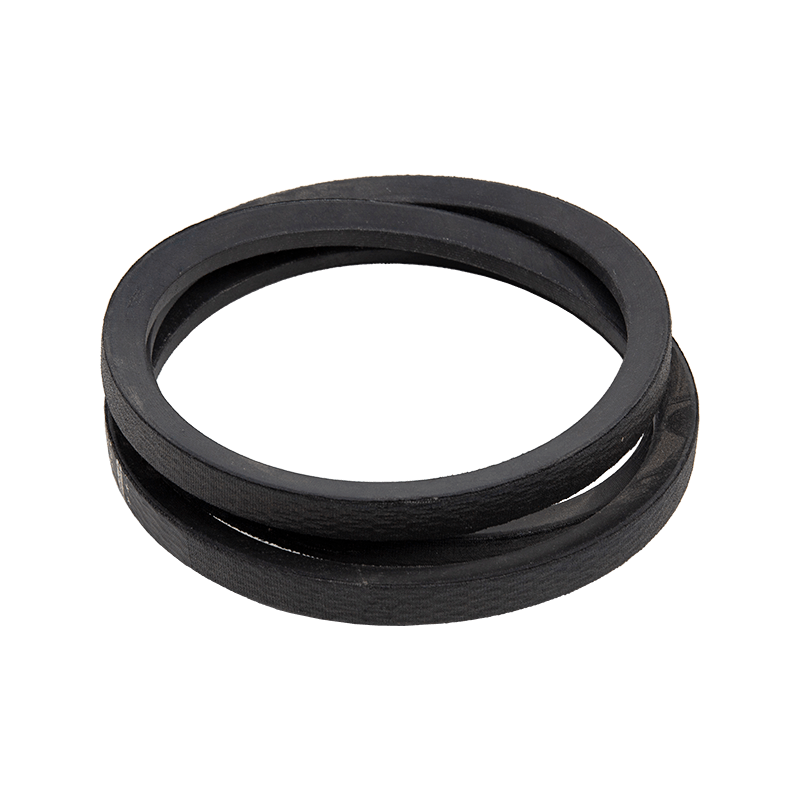
Classical V-belts remain the most universally stocked type globally because the V-groove pulley has been the default design in industrial machinery since the 1930s. An A-section or B-section classical V-belt can be sourced on every continent and fitted to equipment ranging from a grain elevator head pulley to a swimming-pool pump motor. Browse the industrial V-belt product range for cross-section and length options that cover the full ISO spectrum.
Multi-ribbed PK belts have become the standard in automotive serpentine systems since the 1990s. A single PK belt drives the alternator, water pump, air-conditioning compressor, and power-steering pump from one crankshaft pulley, which is why compatibility across vehicle platforms is so commercially important. A 6PK belt with the correct outside length will replace an OEM belt on any vehicle using a 6-rib serpentine system, regardless of the original manufacturer — provided the belt length matches. The automotive fan belt solutions for vehicles and trucks cover PK multi-ribbed options in lengths from 700 mm to over 2,500 mm.
How to Specify the Right Belt for Maximum Compatibility
Specifying a high-compatibility fan belt correctly takes three inputs: cross-section, outside circumference, and operating conditions. With those three parameters, any ISO-compliant belt can be cross-referenced to an equivalent product from another manufacturer or product line.
Step 1 — Read the existing belt
The part number is usually molded into the belt's outer face. An example like "B-55" means a B-section belt with a 55-inch outside circumference. "6PK1750" means a 6-rib PK-series belt, 1,750 mm outside circumference. If the molded marking is worn off, measure the outside length with a soft tape and the top width with calipers, then match to the nearest ISO cross-section table.
Step 2 — Cross-reference to an equivalent
Published cross-reference tables — available from belt manufacturers and industrial distributors — map OEM part numbers to ISO designations. A Gates K060882, an ACDelco 6K882, and a 6PK2240 belt from any ISO-certified manufacturer are functionally identical provided the outside length code matches. Cross-referencing eliminates single-source dependency and opens the field to a much larger pool of compatible options.
Step 3 — Verify tension and pulley condition
A high-compatibility belt fitted into a worn pulley groove will wear prematurely regardless of its quality. Before fitting a replacement, check the pulley grooves for cupping or glazing. Correct belt tension is 40–60 N deflection force per 100 mm of free span for most automotive and light industrial drives — consult the equipment manual for specific values. An automatic tensioner, where fitted, should maintain consistent pressure throughout the belt's service life without adjustment.
Maintenance Cycles and Compatibility Warning Signs
Replacement intervals
EPDM fan belts on automotive applications typically carry manufacturer recommendations of 60,000 to 100,000 km, significantly longer than the 40,000–60,000 km intervals common for older neoprene designs. Industrial fan belt drives on continuous-duty equipment should be inspected at every scheduled maintenance interval — in most manufacturing environments, that means quarterly visual checks and annual hands-on inspection with tension measurement. Agricultural belts running seasonal harvesting equipment should be replaced at the start of each harvest season regardless of apparent condition, because intermittent storage accelerates fatigue in the cord matrix.
Recognizing compatibility-related wear
Not all belt wear is material failure. Some patterns indicate a compatibility mismatch rather than product defect:
- Edge cracking only — belt is riding too high in the groove (belt too wide for the pulley); cross-section mismatch.
- Bottom contact glazing — belt is bottoming out in the groove (belt too narrow); wedging action lost.
- Chirping noise under load — insufficient tension or pulley misalignment; check center distance and idler position.
- Uneven rib wear on multi-ribbed belts — pulley grooves are worn or the belt is twisted during installation; pulley replacement may be needed before the belt can perform as designed.
A correctly specified, correctly installed EPDM belt running in sound pulleys should show even, gradual wear with no cracking or delamination until it approaches its design service life.
OEM/ODM Support: When Custom Compatibility Matters
Standard ISO dimensions handle the majority of fan belt replacement requirements. But some applications fall outside the published standards: specialized agricultural headers, custom industrial fan assemblies, retrofitted drive systems on older equipment, or export configurations designed for non-standard pulley profiles. In those situations, a belt manufacturer with genuine OEM/ODM capability can produce a belt to the customer's dimensional drawing, with material and cord selection optimized for the operating environment.
The value of OEM/ODM support in the context of high-compatibility belts is twofold. First, a manufacturer with in-house laboratory testing can validate a custom belt against the actual drive parameters — load cycle, temperature, speed ratio — before it enters production, eliminating field failures caused by untested substitutions. Second, custom-length belts manufactured in quantity to a customer's specification eliminate the tolerance stack-up that occurs when a standard belt is the closest available approximation to an ideal length. Even a 2% length deviation on a high-tension drive can reduce belt life by 30% or more due to cyclical stress concentration at the splice point.
For buyers managing equipment fleets with non-standard drive systems, the ability to source a private-label belt to specification — with OEM part number cross-referencing and consistent quality across production batches — delivers compatibility assurance that off-the-shelf products cannot match. Explore the custom OEM/ODM belt manufacturing options available for specialized applications and volume requirements.


Contact
-

+86-510-82113539
Shirley: +86-18906170683
Got questions? Call us 24/7 -

[email protected]
Contact us now for a quote -

No.99 Fu Rong Zhong San Rd, Xishan District Economic and Technological Development Zones Wuxi City, Jiangsu, China
Copyright © Wuxi KUEISN Transmission Equipment Co.,Ltd.All Rights Reserved. OEM Industrial Timing Belt and Synchronous Pulley Manufacturer
