


 English
 Português
 Indonesia
Submit feedback
Timing Belt vs Timing Chain: The Maintenance Cost Truth Mechanics Won't Volunteer
Two car owners sit in the same waiting room. One gets a quote for a timing belt replacement: a fixed number, scheduled weeks in advance, done by lunchtime. The other gets a call mid-repair: the timing chain has stretched, the guides are worn, and the estimate just tripled because the front cover is already off. Same category of part, same basic job — synchronizing the crankshaft and camshaft — but two completely different financial experiences.
Most comparisons stop at price ranges: belts cost less per service, chains cost more when they fail. That's true, but it skips the part that actually determines what an owner pays over the life of a car — and it's rarely the number on the estimate that matters most.
This Isn't Two Prices — It's Two Kinds of Risk
A timing belt is a scheduled expense. The manufacturer sets an interval, usually somewhere between 60,000 and 100,000 miles, and the cost is known well in advance. It's the automotive equivalent of a subscription: predictable, budgetable, and entirely within the owner's control.
A timing chain isn't a scheduled expense at all — it's a bet. Most chains outlast the vehicle with no direct replacement cost. But when a chain-related failure does happen, the bill isn't just higher, it belongs to a different category of expense entirely, because the chain sits inside the engine, submerged in oil, behind a cover that often requires pulling the water pump or even the cylinder head to access.
The number that actually matters isn't the average cost of either system. It's the expected value of each: a belt's cost is a near-certainty multiplied by a modest number, while a chain's cost is a small probability multiplied by a very large number. On engines classified as interference designs — where the pistons and valves occupy overlapping space when the camshaft stops — a snapped belt doesn't just strand the car. Independent technical references on interference engine failure describe how the pistons strike the open valves within a fraction of a second, an event that can escalate a routine maintenance item into a full engine rebuild.
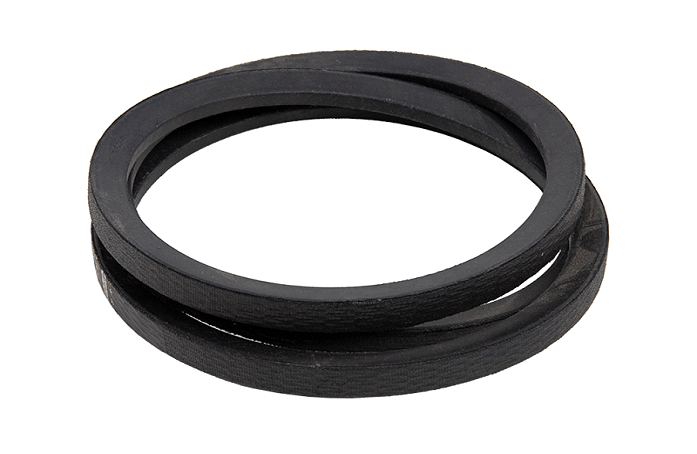
This is why a car with an interference belt engine and a car with a chain engine aren't really being compared on cost at all when someone just lines up two dollar figures. One owner is paying rent. The other is holding a lottery ticket they didn't choose to buy — and for interference-engine vehicles, skipping the scheduled belt service is effectively betting against very unfavorable odds. Vehicles built around a highly adaptable car timing belt built for interference-engine reliability exist specifically to keep that bet off the table by making the scheduled replacement itself as dependable as possible.
Why Your Mechanic's Advice Follows the Shop's Business Model
There's a quieter reason belt maintenance gets talked about more than chain maintenance, and it has nothing to do with which system is objectively more important to watch. It comes down to how each type of work fits into a repair shop's business.
Belt replacement is a standardized, quotable, schedulable service. A shop can look up the interval for a given engine, price the job accurately in advance, and slot it into a calendar. It's the kind of work that supports proactive outreach — reminder calls, service package deals, mileage-based marketing — because the shop knows exactly what it's selling before the customer even calls.
Chain issues don't work that way. There's no standard interval to build a service reminder around, so a chain problem is almost always diagnosed reactively — after a cold-start rattle, a check-engine code, or a symptom the owner already noticed. That means:
- Shops have a structural incentive to promote scheduled, quotable belt services more actively than open-ended chain inspections
- Chain-related wear gets discussed mainly after it's already a problem, not while it's still preventable
- Owners of chain-driven vehicles often assume "no scheduled replacement" means "nothing to monitor," which isn't the same thing
None of this means shops are acting in bad faith — it's simply that the advice an owner hears tends to mirror what's easiest to sell, not necessarily what's most relevant to their specific engine. Knowing that asymmetry exists is often more useful than any single price comparison, because it explains why belt maintenance feels well-communicated and chain maintenance feels like a mystery until it isn't.
"Maintenance-Free" Chains Come With a Quiet Condition
Timing chains are often described as maintenance-free, and mechanically that's close to true — there's no mileage-based chain replacement built into most service schedules. But that description skips the one variable a chain's longevity actually depends on: oil quality and change intervals.
A chain runs submerged in engine oil, and so do its guides and tensioner. Chain stretch, guide wear, and tensioner failure are all accelerated by degraded oil — sludge buildup, additive breakdown, and reduced film strength all show up as chain-side wear over time. This isn't a minor footnote either: the current API SP oil category specifically introduced a dedicated chain wear test as part of its certification requirements, which is a fairly direct acknowledgment from the oil industry that chain durability isn't automatic — it's a byproduct of oil performance that has to be engineered and verified.
In other words, "maintenance-free" really means "the maintenance moved somewhere else." An owner who skips oil changes on a chain-driven engine isn't avoiding a cost — they're just deferring it into a category (chain guides, tensioners, timing cover reseal, water pump removal for access) that costs far more to fix once it surfaces. Belt-driven engines have their own version of this bundling: how car V-belts keep an engine running smoothly covers why tensioners, idlers, and sometimes the water pump are worth replacing at the same time as the belt itself, for the same reason — shared labor access, not shared failure timing.
What Actually Matters When Deciding How to Budget
Neither system is universally better — the right way to think about it depends on what's actually under the hood and how the car is driven. Before assuming either "predictable belt cost" or "maintenance-free chain" tells the full story, it's worth checking:
- Whether the engine is an interference design, since that single fact changes the belt-side risk calculation entirely
- What the actual belt replacement interval is by mileage and by time, since rubber ages even on low-mileage vehicles
- Oil change history on chain-driven engines, since chain and guide longevity tracks oil condition far more than mileage alone
- Whether any cold-start rattle or timing-related noise has been dismissed as normal rather than investigated
- Whether a shop's recommendation reflects the vehicle's actual risk profile or simply what's easiest for the shop to schedule and quote
The real cost comparison was never belt price versus chain price. It's the cost of a known, scheduled service against the cost of an unmanaged risk — and which side of that comparison an owner ends up on depends less on which system their car has, and more on whether it gets treated with the attention its actual failure mode deserves. For vehicles that do run on a belt, browsing the full range of car belts by engine compatibility rather than price alone is the more reliable way to keep that risk where it belongs — scheduled, not gambled.


Contact
-

+86-510-82113539
Shirley: +86-18906170683
Got questions? Call us 24/7 -

[email protected]
Contact us now for a quote -

No.99 Fu Rong Zhong San Rd, Xishan District Economic and Technological Development Zones Wuxi City, Jiangsu, China
Copyright © Wuxi KUEISN Transmission Equipment Co.,Ltd.All Rights Reserved. OEM Industrial Timing Belt and Synchronous Pulley Manufacturer
