


 English
 Português
 Indonesia
Submit feedback
Eagle Synchronous Pulley: HOT Design, Specs & Industrial Applications
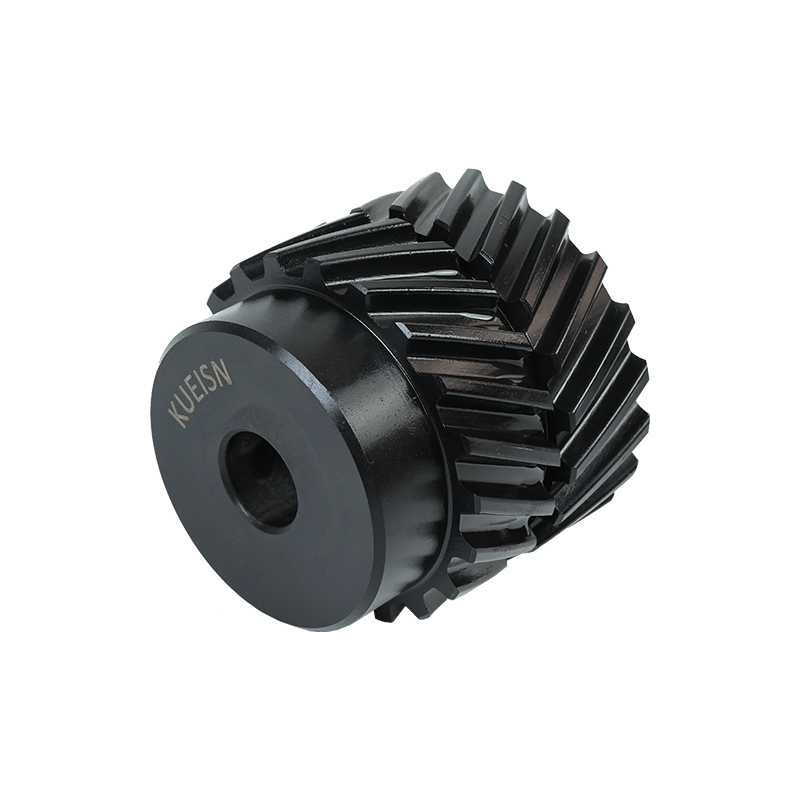
What Is an Eagle Synchronous Pulley?
Most synchronous belt drives transmit power through straight teeth that engage the belt all at once — a design that works, but one that generates impact noise and vibration at every tooth-mesh cycle. The Eagle synchronous pulley solves this problem at the pulley geometry level. Its groove profile is engineered specifically to match the double helical offset tooth (HOT) pattern of Eagle-type timing belts, where two mirrored rows of V-shaped teeth are staggered by half a pitch. The result is continuous, rolling engagement rather than sudden impact, which fundamentally changes how force is transferred between belt and pulley.
Eagle pulleys are the matched counterpart to eagle and herringbone timing belt specifications and applications. The two components are designed as a system: the belt's helical teeth track precisely within the pulley's V-shaped grooves without requiring flanges to guide the belt laterally. This self-tracking behavior is a direct consequence of the HOT geometry and sets the Eagle system apart from conventional straight-tooth synchronous drives.
Available in standard pitches of 5M, 8M, 10M, and 14M, Eagle synchronous pulleys are produced in cast iron or steel and can be supplied with solid hubs, taper bushing bores, or custom configurations to match your shaft and mounting requirements.
Key Technical Advantages
The performance case for Eagle pulleys starts with noise. Straight-tooth synchronous belts generate a dominant tonal frequency at every tooth-engagement event, and its harmonics accumulate quickly in enclosed machine housings. The helical offset tooth design addresses this directly: because one side of the belt tooth is 180° out of phase with the other, the pressure waves generated by each half of the belt largely cancel each other out. Measured noise reduction versus standard straight-tooth synchronous drives reaches up to 15–19 dB — a difference that is immediately perceptible on the shop floor and critical in noise-sensitive environments such as food processing facilities, printing plants, and textile mills. The physical mechanism behind this cancellation is explained in detail in this engineering reference on synchronous belt noise reduction principles.
Beyond acoustics, the Eagle pulley system delivers several practical engineering advantages:
- Vibration reduction: Rolling tooth engagement smooths out the impulsive forces that cause resonance in machine frames and downstream components, extending bearing and shaft life.
- No flanges required: The V-groove geometry naturally centers the belt on the pulley, eliminating the need for side flanges on most horizontal drive configurations and simplifying pulley design.
- Bidirectional operation: The symmetric helical tooth pattern allows the drive to reverse direction without compromising tracking or engagement quality — an important property for reciprocating drives and indexing tables.
- High torque capacity: The larger 8M and 14M pitches support high-horsepower applications where a conventional V-belt drive would require multiple belts and wider pulleys.
- Static conductivity: Eagle-compatible belts and pulleys meet antistatic requirements per ISO 9563, making them suitable for explosive or dust-sensitive environments.
- Energy efficiency: Reduced friction at the tooth-mesh interface translates to measurable drive efficiency gains, particularly at high rotational speeds.
Taken together, these properties make the Eagle synchronous pulley a strong candidate for any application where a standard synchronous drive produces unacceptable noise or vibration, or where a multi-V-belt arrangement is due for replacement.
Materials and hub options cover the majority of industrial mounting needs. Standard bodies are produced in cast iron (GG25) for general industrial use and in steel for applications requiring higher shock resistance or lower weight. Hub configurations include plain bore, keyway bore, and taper bushing bore (compatible with SIT®-type or equivalent taper lock bushings). For non-standard shaft diameters, flange positions, or tooth counts, KUEISN accepts OEM tooling requests with lead times agreed per project.
Belt width selection follows the matched belt series: 8M and 14M pulleys are available in multiple belt-width variants, typically 20 mm through 170 mm depending on the horsepower requirement. Consult the drive calculation for your specific speed ratio and center distance before specifying belt width, since undersizing the belt width is one of the most common causes of premature Eagle drive wear.
Industrial Applications
The combination of high torque capacity and low noise makes Eagle synchronous pulleys a fit for industries where those two demands coincide. The following sectors represent the highest-volume application areas.
- Printing and packaging machinery: Press drives, registration rollers, and folding units require phase accuracy between multiple shafts and cannot tolerate the tonal noise that straight-tooth synchronous belts produce at high print speeds. Eagle drives satisfy both requirements simultaneously.
- Textile manufacturing: Spinning frames, looms, and winding machines run continuously at high RPM. The reduction in vibration directly reduces thread breakage rates and improves fabric quality while cutting the acoustic load on operators.
- Food processing lines: Meat cutting equipment, bakery conveyors, and filling lines benefit from the self-tracking, flangeless design that simplifies washdown-compliant guarding. The antistatic belt compound also reduces spark risk in flour-dust environments.
- Agricultural machinery: Harvester drive systems and seeders face shock loads, outdoor temperature variation, and high-vibration frames. The helical offset tooth's progressive engagement absorbs impact more gracefully than straight-tooth systems and reduces structural fatigue.
- Mining and aggregate processing: Crushers, screeners, and conveyors subject drive components to continuous shock. Eagle 14M drives handle the high torque while the noise reduction is a secondary benefit in environments where belt squeal would otherwise require additional guarding.
- CNC spindle drives and automation: Where micrometer-level repeatability matters, the zero-slip characteristic of the Eagle synchronous system — combined with its reduced vibration — protects positional accuracy across long production runs.
How to Choose the Right Eagle Pulley
Selecting an Eagle synchronous pulley is a system-level decision, not just a catalogue lookup. The four variables that drive the specification are pitch, belt width, tooth count (which determines the pitch diameter), and material.
Start with pitch. If your transmitted power and speed are modest — say, a lightly loaded conveyor or a small packaging unit — the 5M pitch is sufficient and keeps the drive compact. For mid-range industrial drives, 8M is the most common choice because it balances size and load capacity. High-horsepower applications above roughly 50 kW at 1000 rpm typically move to 14M, which also accommodates larger shaft diameters without stress concentration concerns. Understanding how timing pulleys differ from standard belt pulleys can help clarify whether a synchronous drive is the right architecture before committing to a pitch size.
Then confirm belt wrap and center distance. Eagle pulleys are self-tracking in horizontal configurations, but very short center distances can reduce belt wrap on the small pulley below 6 teeth of engagement. Below that threshold, tooth load increases rapidly and service life shortens. If space constraints force a short center distance, increase tooth count on the small pulley or move up one pitch size.
Choose material based on environment. Cast iron is the standard selection for indoor industrial environments. Steel is preferred where impact loading is frequent, where the pulley must be lightened, or where operating temperatures exceed 100 °C consistently. For comparison, applications where noise is not a concern and torque requirements are modest may be better served by trapezoidal rubber timing belts for lower torque applications, which offer a lower-cost entry point for simple drives.
Finally, confirm the belt-pulley match. Eagle synchronous pulleys are not interchangeable with HTD or GT profile pulleys even at the same pitch, because the groove geometry differs. Always specify the belt and pulley from the same profile family to ensure correct tooth engagement depth and load distribution.
OEM & Custom Solutions from KUEISN
Wuxi KUEISN Transmission Equipment Co., Ltd. supplies Eagle synchronous pulleys as standard catalogue items and as fully custom-engineered components for OEM applications. Standard items ship in 2–3 days for sample quantities and 10–15 days for production volumes. Custom configurations — including non-standard bore sizes, modified hub lengths, modified tooth counts, or special surface treatments — are handled through the OEM/ODM engineering team with project-specific lead times.
Quality documentation is available on request, including material certifications, dimensional inspection reports, and test data for applications requiring process validation. KUEISN's application-focused testing infrastructure means that prototype pulleys can be evaluated against customer drive parameters before mass production is committed.
For procurement teams sourcing Eagle synchronous pulleys at volume, KUEISN offers consignment stock arrangements, private-label packaging, and direct technical support in English for international OEM customers. Contact the engineering team with your drive data — power, speed, center distance, and shaft diameter — and receive a confirmed specification and price within one business day.


Contact
-

+86-510-82113539
Shirley: +86-18906170683
Got questions? Call us 24/7 -

[email protected]
Contact us now for a quote -

No.99 Fu Rong Zhong San Rd, Xishan District Economic and Technological Development Zones Wuxi City, Jiangsu, China
Copyright © Wuxi KUEISN Transmission Equipment Co.,Ltd.All Rights Reserved. OEM Industrial Timing Belt and Synchronous Pulley Manufacturer
