


 English
 Português
 Indonesia
Submit feedback
CNC Spindle Transmission Precision: How Timing Belts Enable Micrometer Machining
A machining tolerance of 0.001 mm — one micron — is not unusual in modern CNC production of aerospace components, medical implants, or precision molds. At that scale, the weakest link in the mechanical chain determines the quality of every part the machine produces. Bearings matter. Thermal management matters. And the transmission system between the drive motor and the spindle matters more than many engineers give it credit for.
The choice of spindle transmission directly shapes three outcomes: dimensional accuracy, surface finish quality, and long-term repeatability. A transmission that introduces speed variation, backlash, or vibration will degrade all three — regardless of how precisely the rest of the machine is built. This is why timing belts have become the standard transmission solution in high-precision CNC spindle systems, and why understanding their mechanical behavior is essential for anyone specifying or maintaining precision machining equipment.
The Spindle Transmission Problem in CNC Machining
Every CNC spindle drive faces the same fundamental challenge: transferring rotational energy from a motor to a cutting tool with maximum fidelity. The motor produces a speed and torque profile. The spindle must receive that profile accurately — at the right speed ratio, with no added variation, and without introducing mechanical noise that propagates into the cutting zone.
Three transmission architectures are used in practice. Gear drives offer high torque capacity and are common in heavy-duty machining centers, but they generate noise and vibration at tooth-mesh frequencies, and backlash between gear flanks creates positioning uncertainty that becomes visible in surface finish. Direct-drive motorized spindles eliminate the transmission path entirely by integrating the motor rotor onto the spindle shaft — excellent for ultra-high-speed finishing, but the motor's heat generation sits directly adjacent to the precision bearing stack, creating a thermal displacement problem that is difficult to compensate fully.
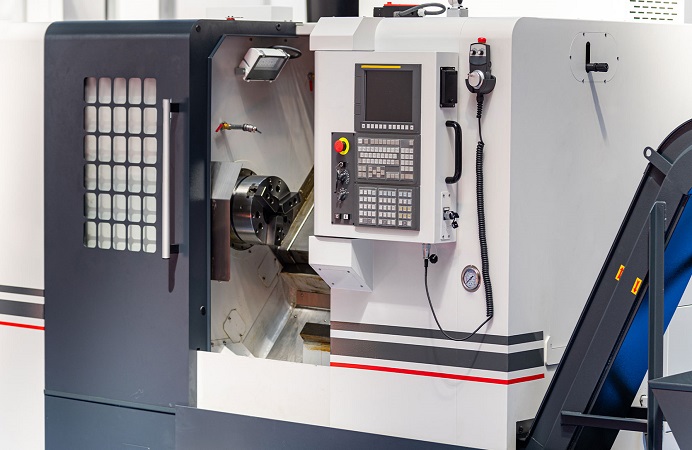
Belt-driven spindles occupy a uniquely advantageous position between these two architectures. timing belt transmission systems for CNC machine tool spindles deliver zero-backlash positive engagement like gears, while keeping the motor thermally isolated from the spindle like a direct-drive arrangement — without the heat-at-source penalty.
How Timing Belts Achieve Micrometer-Level Transmission Precision
The precision of a timing belt drive originates in its fundamental operating principle: tooth-to-groove positive engagement. Unlike V-belts or flat belts, which transmit torque through friction and therefore allow a degree of elastic slip under load, a timing belt meshes mechanically with its pulleys. Every tooth that enters a pulley groove displaces the belt by exactly one tooth pitch. There is no slip — only positive, deterministic motion transfer.
This matters for spindle accuracy in a very specific way. A spindle running at 6,000 rpm completes 100 revolutions per second. Any variation in instantaneous speed — caused by belt slip, gear backlash, or transmission compliance — appears at the tool tip as a periodic error at the tooth-mesh or slip frequency. In surface finish terms, this manifests as chatter marks, waviness, or inconsistent Ra values. In dimensional terms, it appears as variation in bore diameter, roundness error, or inconsistent depth of cut.
High-quality synchronous belt drives eliminate this variation source. The zero-backlash design delivers repeat positioning accuracy of ±0.01 mm in feed-axis applications and maintains constant velocity ratio under dynamic load changes — a critical requirement during interrupted cuts or at spindle speed transitions. The tensile cord within the belt — typically aramid (Kevlar) or carbon fiber in precision machine tool grades — carries the tension load with negligible elastic elongation, so belt pitch remains constant under the load variations of normal machining.
Vibration Damping: The Hidden Precision Advantage
Spindle vibration is one of the most consequential and least visible contributors to poor machining outcomes. Vibration at the cutting zone causes tool chatter, which leaves characteristic patterns on machined surfaces and accelerates tool wear. It also creates dimensional scatter: the cutting edge oscillates slightly relative to the workpiece, producing features that are slightly larger or smaller than commanded.
Gear drives are inherently vibration-generating systems. Every time a gear tooth engages its mating tooth, a small impact occurs at the mesh point. At 6,000 rpm with a 20-tooth gear, this generates a mesh frequency of 2,000 Hz — well within the range that excites structural resonances in machine tool frames and spindle housings. Chain drives exhibit similar behavior.
Timing belts act differently. The elastomeric body of the belt absorbs and attenuates high-frequency impulses at the tooth-engagement point before they can propagate into the spindle bearing stack. This vibration isolation effect is measurable: belt-driven spindles typically show significantly lower vibration amplitudes at spindle nose compared to gear-driven equivalents running at the same speed and load. The practical consequence is better surface finish — particularly Ra values in fine finishing operations — and longer cutting tool life due to reduced impact loading at the cutting edge.
For rubber timing belts designed for CNC spindle drive applications, the neoprene or EPDM body material provides this damping function inherently, while the nylon tooth facing preserves the precise tooth geometry that maintains transmission accuracy over long service life.
Thermal Behavior: Why Belt Drive Protects Spindle Accuracy
Thermal error is the dominant source of inaccuracy in precision CNC machine tools during warm-up and continuous operation. As the spindle assembly heats up, differential thermal expansion displaces the tool center point (TCP) relative to the workpiece coordinate system — producing dimensional errors that worsen as the machine approaches thermal equilibrium, then stabilize, then shift again when cutting conditions change.
In a motorized (direct-drive) spindle, the primary heat source — the stator windings — is located inside the spindle housing, directly adjacent to the front bearing. Heat generated by the motor flows directly into the bearing preload system, causing axial displacement of the spindle nose. This displacement can reach tens of microns during warm-up, requiring either compensation algorithms or extended warm-up cycles before precision work can begin.
A belt-driven spindle keeps the motor external to the spindle housing, connected by the belt drive. The motor's heat generation occurs at a distance from the precision bearing stack. The belt itself introduces minimal frictional heat — well-designed synchronous drives run at 95–98% efficiency, meaning less than 5% of transmitted power is converted to heat at the belt-pulley interface. The result is a spindle system that reaches thermal equilibrium faster, with lower peak displacement, and with a more stable thermal gradient that compensation systems can model accurately.
Carbon fiber reinforced timing belt variants push this thermal advantage further. With thermal expansion coefficients below 1×10⁻⁶/°C — roughly ten times lower than steel — carbon fiber tensile cord belts maintain consistent pitch length across wide temperature ranges, preserving transmission accuracy even as the surrounding machine structure expands and contracts with ambient and process temperature changes.
Speed Ratio Flexibility and Torque Multiplication
Precision machining spans an enormous range of operating conditions. Finishing a hardened steel mold cavity with a 0.5 mm ball-end mill requires high spindle speeds — 15,000 rpm or more — and light radial loads. Roughing a titanium aerospace component with a 25 mm end mill requires moderate speed but very high torque. A single motor rarely delivers optimal performance across this entire range without a variable-ratio transmission stage.
Timing belt drives provide this flexibility elegantly. By changing the pulley ratio — larger drive pulley, smaller driven pulley, or vice versa — the designer can configure the spindle for a specific speed-torque operating envelope without changing the motor. A 1:1.5 reduction ratio multiplies motor torque by 1.5 while reducing spindle speed proportionally, well-suited to heavy-duty roughing. A 1.5:1 step-up ratio increases spindle speed beyond the motor's rated RPM while reducing torque — appropriate for high-speed finishing of aluminum or non-ferrous alloys.
This tunability is one reason belt-driven spindles remain the preferred architecture for general-purpose machining centers, where the machine must handle both roughing and finishing across diverse materials. The belt drive acts as a fixed-ratio gearbox that can be reconfigured for a new application simply by swapping the pulley set — a far simpler and more economical modification than redesigning the motor or adding a mechanical gearbox.
Matching the correct precision timing pulleys to your spindle belt specification is as important as selecting the belt itself — pulley tooth geometry, groove finish, and dynamic balance at operating speed all directly influence transmission accuracy and vibration levels at the spindle.
Belt Selection for CNC Spindle Precision: Key Engineering Parameters
Specifying a timing belt for a CNC spindle drive requires attention to parameters that general industrial belt catalogs may underspecify. The following engineering considerations determine whether a belt will perform at micrometer-level precision or merely transmit torque adequately.
Tooth Profile and Pitch
Trapezoidal tooth profiles (MXL, XL, L series) are serviceable for general power transmission but produce higher tooth-impact forces and more transmission error at high speeds compared to curvilinear profiles. For spindle drives requiring low vibration and high speed, HTD, GT, or AT profiles — all featuring curved tooth geometry — distribute contact stress more evenly, reduce impact noise, and maintain tighter velocity uniformity under dynamic load. AT profiles in particular are engineered for high stiffness-to-weight ratio, making them preferred in CNC tool-changer drives and feed axes where positioning accuracy must be maintained under rapid acceleration.
Tensile Cord Material
Standard fiberglass cord provides good tensile strength and dimensional stability for most industrial applications. For CNC spindle drives operating under thermal cycling or requiring the tightest pitch stability, carbon fiber reinforced Eagle timing belts with herringbone tooth profiles offer substantially lower elongation under tension and near-zero thermal expansion — addressing both the load-induced and temperature-induced sources of belt pitch variation that degrade transmission accuracy.
Belt Width and Dynamic Balance
Wider belts carry higher loads at lower unit tooth pressure, extending service life — but add rotating inertia to the drive system, which reduces dynamic responsiveness during spindle speed changes. For high-speed spindle applications, the correct belt width is the minimum that satisfies the torque requirement with an adequate safety factor, not the widest belt that fits the pulley. Belts operating above 10,000 rpm should also meet dynamic balance requirements to avoid introducing belt-rotation-frequency vibration into the spindle.
Tensioning Precision
Under-tensioned timing belts allow tooth skip under shock loads and generate vibration from slack-side flutter. Over-tensioned belts increase bearing loads, raise operating temperature, and accelerate belt fatigue. For spindle applications, tension must be set to the manufacturer's specification using a frequency-based tensioning method — measuring belt natural frequency with a vibration sensor and adjusting tension to the calculated target. This method achieves consistent, repeatable tension regardless of belt length or pulley center distance variation.
From Spindle to Feed Axis: Timing Belts Across the CNC Machine
The same precision advantages that make timing belts the correct choice for spindle drives apply throughout the CNC machine tool. Feed axis drives — the ball-screw servo systems that position the table, saddle, and quill — use timing belt connections between servo motor and ball screw in the majority of modern machining centers. Here, belt-drive flexibility allows the motor to be offset from the screw axis, enabling more compact axis designs and easier machine maintenance access.
Automatic tool changers (ATCs) rely on timing belt drives to index the tool magazine and actuate the tool change arm with the speed and precision that minimizes non-cutting time. The ATC timing belt must deliver repeatable angular positioning of the magazine — typically within ±0.1° — to ensure reliable tool-to-spindle engagement on every tool change cycle. Failures here show up not as dimensional errors but as tool change faults, machine stoppages, and in worst cases, tool damage from misalignment at spindle entry.
For machine builders and maintenance engineers looking to standardize timing belt specifications across spindle, feed, and ATC applications, OEM and ODM custom timing belt programs engineered to machine tool specifications ensure that every belt in the machine — regardless of application — is manufactured to the same precision standards, with matched tooth profiles and tensile cord specifications that support the machine's overall accuracy target.
Maintaining Spindle Precision Over the Belt Service Life
A timing belt enters service with defined dimensional properties. Keeping those properties stable over thousands of operating hours requires attention to three maintenance factors.
Tension monitoring is the most important. Belt tension changes gradually as the tensile cord settles into its operational elongation state during the first 20–50 hours of operation, then stabilizes. A belt re-tensioning check at the first scheduled maintenance interval — and periodic checks thereafter — ensures the drive remains within the manufacturer's tension specification. Modern precision spindle housings increasingly incorporate integrated tension monitoring interfaces that allow non-intrusive tension measurement without opening the belt guard.
Pulley alignment has a direct impact on belt life and transmission accuracy. Misalignment between drive and driven pulley produces uneven load distribution across the belt width, accelerating edge wear and introducing a cyclic lateral force that can excite spindle vibration. Alignment should be verified whenever the belt is changed or the motor mount is disturbed.
Contamination control matters particularly in CNC environments where cutting fluid mist and metal particles are present. Most synchronous belts used in CNC spindle applications are specified for oil-resistant tooth facing materials. However, heavy contamination of the belt-pulley interface — particularly from neat cutting oils — can reduce friction between tooth faces and pulley grooves in a way that promotes tooth jump under shock loads. Belt guards should be inspected regularly to confirm sealing integrity.
A correctly specified, properly installed, and well-maintained timing belt drive will deliver consistent micrometer-level transmission precision for well over 20,000 operating hours — translating directly into stable part quality and reduced machine downtime across the service life of the CNC investment.


Contact
-

+86-510-82113539
Shirley: +86-18906170683
Got questions? Call us 24/7 -

[email protected]
Contact us now for a quote -

No.99 Fu Rong Zhong San Rd, Xishan District Economic and Technological Development Zones Wuxi City, Jiangsu, China
Copyright © Wuxi KUEISN Transmission Equipment Co.,Ltd.All Rights Reserved. OEM Industrial Timing Belt and Synchronous Pulley Manufacturer
